The Renaissance, spanning roughly from the 14th to the 17th century, was a period of immense cultural, artistic, and intellectual transformation. Its masterpieces—from da Vinci’s Mona Lisa to Michelangelo’s David—are instantly recognizable even today. But Renaissance art is more than just a collection of famed paintings and sculptures; it’s a living influence that shapes aspects of our modern world in subtle yet profound ways. This article explores how Renaissance art continues to inform contemporary culture, design, education, and even technology, revealing its enduring legacy in the 21st century.
Renaissance Aesthetics: Shaping Modern Visual Culture
Renaissance artists pioneered new techniques and ideals that revolutionized Western art. Their achievements are not locked in the past; instead, they have become templates for beauty, perspective, and composition still used today. The use of linear perspective, developed by Filippo Brunelleschi around 1415, created the illusion of depth on a flat surface—a breakthrough that underpins photography, cinema, and digital art.
The “golden ratio,” famously applied by Leonardo da Vinci in works like the Vitruvian Man, is another Renaissance concept that remains central in design. Modern architects, graphic designers, and even app developers use this mathematical proportion to create aesthetically pleasing layouts. According to a 2018 study published in Frontiers in Human Neuroscience, images adhering to the golden ratio are rated as more attractive by 75% of viewers.
.png)
In fashion, Renaissance motifs reappear in haute couture. Designers such as Dolce & Gabbana and Versace frequently reference Renaissance patterns, embroidery, and silhouettes, demonstrating the era’s continued visual impact.
The Humanist Legacy: Art as a Reflection of Human Potential
One of the defining features of Renaissance art was its embrace of humanism—the celebration of human potential, individuality, and realism. This philosophical shift marked a departure from the strictly religious art of the Middle Ages, putting people and their experiences at the center of creative expression.
Contemporary portraiture, advertising, and film often echo the Renaissance’s focus on personality and emotion. For example, the psychological depth found in da Vinci’s Mona Lisa or Raphael’s portraits can be seen in the character-driven photography of Annie Leibovitz or the emotive close-ups in modern cinema.
Furthermore, the Renaissance ideal of the “universal man”—someone skilled in multiple disciplines—finds resonance today in the appreciation for interdisciplinary talent. Think of artists like Beyoncé or Donald Glover, who seamlessly blend music, acting, and visual art, embodying a Renaissance-like versatility.
Education and the Renaissance Model: Inspiring Creative Learning
The Renaissance was not only a period of artistic achievement but also of intellectual curiosity and innovation. Its educational ideals fostered a blend of science, art, and literature—a model that still inspires modern curricula.
Today, leading educational institutions adopt a “Renaissance approach” by encouraging STEAM (Science, Technology, Engineering, Arts, Mathematics) learning. The Massachusetts Institute of Technology (MIT), for example, integrates arts into its technical programs, echoing the Renaissance belief that creativity and scientific inquiry go hand in hand.
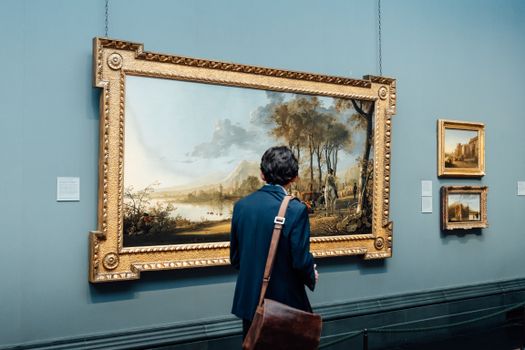
Moreover, museum-based learning—where students engage with original artworks in settings like the Louvre or the Uffizi—mirrors Renaissance workshop practices. According to UNESCO, 35% of European secondary schools now include regular visits to museums or galleries as part of their curriculum, a testament to the lasting educational impact of Renaissance traditions.
Renaissance Art in Popular Media and Technology
The digital age offers new platforms for Renaissance art to reach audiences. Masterpieces are no longer confined to museums; they are reimagined in memes, video games, and films, often gaining viral popularity.
For instance, the video game series Assassin’s Creed, particularly its installment Assassin’s Creed II, recreates 15th-century Florence and features characters modeled after real Renaissance figures. The franchise has sold over 155 million copies as of 2023, introducing millions to Renaissance art and architecture in an interactive way.
Film and advertising also borrow heavily from Renaissance iconography. The 2015 film “Ex Machina” visually references the frescoes of Michelangelo’s Sistine Chapel, while music videos by artists such as Madonna and Lady Gaga have staged scenes inspired by Botticelli’s The Birth of Venus and other classics.
The table below summarizes some key areas where Renaissance art and motifs are visible in modern culture:
| Modern Domain | Renaissance Influence | Example |
|---|---|---|
| Film & TV | Use of chiaroscuro, composition, and classical themes | “The Da Vinci Code,” “Ex Machina” |
| Video Games | Architectural and character design, historical settings | Assassin’s Creed II |
| Fashion | Motifs, embroidery, silhouette | Dolce & Gabbana, Versace |
| Graphic Design | Golden ratio, perspective, symmetry | Logos, website layouts |
| Education | STEAM integration, art-based learning | MIT, museum programs |
Architectural Echoes: Renaissance Principles in Urban Design
The Renaissance architects, including Andrea Palladio and Leon Battista Alberti, developed principles of symmetry, proportion, and harmony that profoundly shaped Western architecture. Their treatises and buildings inspired not just their contemporaries, but generations of architects worldwide.
Modern cityscapes are filled with echoes of Renaissance design. The Capitol in Washington, D.C., for example, draws directly from Palladio’s villas. Globally, neoclassical architecture—seen in government buildings, museums, and universities—borrows columns, domes, and facades from the Renaissance tradition.
According to the Council on Tall Buildings and Urban Habitat (CTBUH), more than 60% of major public buildings constructed in Europe and the Americas between 1800 and 1950 were designed using Renaissance or neoclassical principles. Today, architects continue to reference these aesthetics for their timeless appeal and sense of grandeur.
Renaissance Art in Social Commentary and Activism
The Renaissance didn’t shy away from bold statements—think of Michelangelo’s David as a symbol of Florentine freedom. Contemporary artists and activists similarly harness the visual language of the Renaissance to comment on today’s issues.
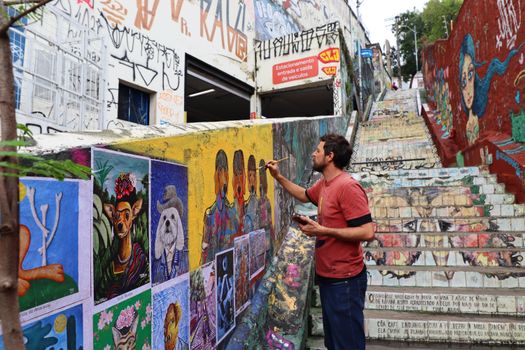
Street artists like Banksy use Renaissance imagery to create ironic juxtapositions or critique consumerism and politics. In 2018, Banksy’s “Venus de Milo with Drawers” reinterpreted classical art to question modern-day materialism. Meanwhile, campaigns for social justice often adopt Renaissance-like compositions to evoke empathy and historical continuity.
Museums and galleries increasingly curate exhibitions that place Renaissance works alongside contemporary pieces, encouraging viewers to draw parallels between past and present challenges—be it gender roles, power, or identity.
Final Reflections: The Renaissance Continuum in Modern Culture
The influence of Renaissance art in today’s culture is both visible and invisible, present in the way we design our homes, educate our youth, and even scroll through our phones. It’s in the logo you recognize, the movie you watch, and the city you walk through. As technology evolves, the Renaissance’s ideals of beauty, balance, and curiosity adapt and reemerge, proving that great art never truly leaves us—it simply finds new forms.
From the golden ratio in your favorite app to the emotive storytelling found in blockbuster films, the Renaissance continues to shape our collective imagination. Its legacy is not only in what we see, but in how we think, create, and aspire. In a world hungry for innovation, the Renaissance offers a timeless reminder: art and culture are powerful engines of progress.