In recent decades, the world of art has undergone a seismic shift. What was once bound by canvas, pigment, and physical form now stretches into realms powered by pixels, code, and global connectivity. The digital age has not only introduced new tools for creation but has also transformed how art is experienced, distributed, and even defined. In this deep dive, we’ll explore how art in the digital age is shaped by new mediums and what possibilities these innovations unlock for artists, audiences, and the industry at large.
The Dawn of Digital Art: From Pixels to Possibilities
The journey of digital art began in the 1960s with computer-generated imagery and experimental projects like Frieder Nake’s algorithmic drawings or Harold Cohen’s art-producing program, AARON. Fast-forward to the 21st century, and digital art encompasses a vast array of mediums—from digital painting and 3D modeling to interactive installations and augmented reality (AR).
Today, over 65% of artists under the age of 35 use digital tools as part of their creative process, according to the 2023 ArtTech Insight Report. Digital art is no longer a niche—it's a thriving ecosystem, supported by platforms such as Behance, Instagram, and NFT marketplaces where creators share, sell, and collaborate worldwide.
.png) This rise is powered by several key innovations:
- Affordable tablets and styluses like the iPad Pro and Wacom Cintiq.
- Open-source and industry-leading software such as Krita, Adobe Creative Cloud, and Blender.
- High-speed internet, enabling collaborative and interactive art forms.
This rise is powered by several key innovations:
- Affordable tablets and styluses like the iPad Pro and Wacom Cintiq.
- Open-source and industry-leading software such as Krita, Adobe Creative Cloud, and Blender.
- High-speed internet, enabling collaborative and interactive art forms.
These advances have redefined what it means to be an artist and how art is conceived, offering democratized access to tools and audiences previously unimaginable.
Virtual Reality and Augmented Reality: Immersive Art Experiences
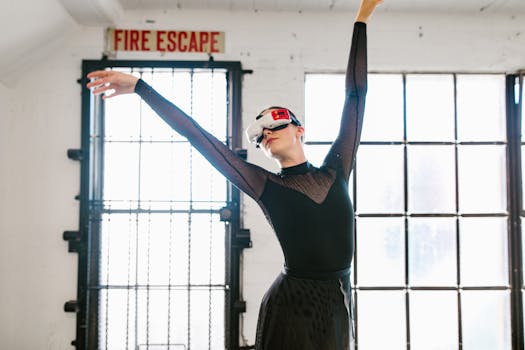
Virtual Reality (VR) and Augmented Reality (AR) represent some of the most revolutionary mediums in digital art today. Unlike traditional art forms that are viewed from a distance, VR and AR engage viewers as participants, blurring the line between creator and audience.
For example, the 2019 exhibition “Digital Realities” at the Tate Modern featured VR-based artworks that allowed visitors to step inside the pieces themselves. In a similar vein, AR-enhanced murals can be viewed through smartphones, revealing hidden animations and interactive elements.
According to Statista, the global AR and VR market in art and culture reached $2.6 billion in 2023, with projections exceeding $10 billion by 2027. These technologies allow for: - Fully immersive worlds, as seen in artist Rachel Rossin’s VR installations. - Interactive public art, like Snapchat’s AR Lenses transforming city landmarks. - Educational experiences, such as The Kremer Museum’s entirely virtual gallery.This interactivity is not just a novelty—it’s changing the way people relate to and remember art. Studies show interactive experiences can boost art recall by up to 40% compared to passive viewing.
AI-Generated Art: Creativity in Collaboration with Algorithms
Perhaps nothing epitomizes digital innovation in art more than the rise of AI-generated works. Artificial Intelligence, especially tools powered by machine learning and neural networks, can now generate original compositions, mimic famous styles, and even collaborate with human artists.
One of the most well-known examples is “Edmond de Belamy,” an AI-generated portrait that sold at Christie’s for $432,500 in 2018. Since then, AI art platforms like DALL-E, Midjourney, and Artbreeder have exploded in popularity. According to a 2023 survey by ArtNet, 18% of professional artists have experimented with AI as part of their creative process.
AI’s role in art is multifaceted: - It can generate unique images or music based on text prompts. - Artists can train AI models on their own styles, producing endless variations. - AI enables generative art that evolves in real time, responding to environmental data or user interaction.Despite debates about authorship and authenticity, AI is undeniably expanding the boundaries of creativity, allowing artists to explore concepts and aesthetics previously out of reach.
Digital Art Markets: NFTs, Ownership, and Global Access
Perhaps the most headline-grabbing development in digital art has been the rise of Non-Fungible Tokens (NFTs) and blockchain technology. NFTs enable digital artwork to be bought, sold, and owned as unique assets, resolving long-standing issues around provenance and copyright.
In March 2021, digital artist Beeple (Mike Winkelmann) sold an NFT collage, “Everydays: The First 5000 Days,” for $69.3 million at Christie’s. This watershed moment propelled NFTs into the mainstream and sparked a new era for digital artists.
Key statistics from NonFungible.com’s 2023 report: - NFT art sales exceeded $2.1 billion in 2022. - More than 1.3 million unique NFT art buyers participated in the market that year. - The average NFT artwork sold for around $1,200, though prices ranged from under $10 to millions.NFTs also empower creators to receive royalties from secondary sales, a feature rarely available in the traditional art world. However, the NFT boom has highlighted challenges too, such as environmental concerns around blockchain energy use and market volatility.
Comparing Traditional and Digital Art: Opportunities and Challenges
To better understand the transformation, here’s a comparison between traditional and digital art across key dimensions:
| Aspect | Traditional Art | Digital Art |
|---|---|---|
| Mediums | Paint, sculpture, photography, print | Digital painting, VR, AR, AI, NFTs |
| Accessibility | Often requires physical space and materials | Accessible globally via internet and devices |
| Distribution | Galleries, museums, auctions | Online platforms, social media, NFT marketplaces |
| Ownership | Physical object, resale less tracked | Blockchain-tracked, programmable royalties |
| Interactivity | Primarily passive viewing | Interactive, immersive, participatory |
| Restoration | Requires expertise, risk of degradation | Digital files can be perfectly preserved or restored |
The digital age does not replace traditional art but rather adds new layers, opportunities, and challenges to the creative landscape.
How Social Media and Online Communities Shape the Future of Art
The digital age is not just about new tools—it’s about new ways of connecting. Social media platforms like Instagram, TikTok, and Discord have democratized access to audiences. In 2022, over 80% of artists surveyed by The Art Newspaper reported using social media as their primary method for sharing work and reaching collectors.
Online communities and digital galleries offer: - Instant feedback and collaborative opportunities with global peers. - Direct-to-collector sales, bypassing traditional gatekeepers. - Crowdsourced projects and viral challenges (e.g., Inktober, #DrawThisInYourStyle).Even museums are adapting: The Louvre’s virtual tours attracted over 10 million online visitors in 2021, more than its physical attendance that year. The digital ecosystem is reshaping how art is discovered, discussed, and valued—sometimes in real time.
The Expanding Definition of Art in the Digital Age
With so many new mediums and platforms, the question arises: What counts as art in the digital age? The boundaries have never been more fluid. Today, art can be a meme shared by millions, a VR installation, or a generative AI piece that changes every second.
This expansion has sparked debates but also unlocked creativity for people who may never have considered themselves artists. According to a 2023 report from Adobe, 62% of Gen Z respondents said digital tools made them more likely to create and share art.
Digital platforms have also amplified voices from historically underrepresented groups, making the art world more inclusive and diverse than ever before.
Art in the Digital Age: Looking Forward
As we look to the future, the possibilities for art in the digital age seem limitless. New technologies such as mixed reality, blockchain, and advanced AI will continue to push boundaries. However, the core purpose of art—to provoke, inspire, and connect—remains unchanged.
The challenge and opportunity for artists, collectors, and audiences will be to adapt to this fast-evolving landscape, embracing both the creative freedom and the ethical questions that come with it. Ultimately, the digital age is not the end of traditional art, but the beginning of an era where creativity knows no bounds.