Creative Writing and Its Connection with Visual Art: How Words Influence Images
The bond between creative writing and visual art is as old as human expression itself. From prehistoric cave paintings accompanied by symbolic marks to the illustrated manuscripts of the Middle Ages, the interplay between words and images has shaped the way we think, feel, and communicate. In today’s culture, where digital storytelling and multimedia art forms reign, this relationship is more dynamic than ever. But how exactly do words influence images? And how do writers and artists collaborate, inspire, and challenge each other? This article explores the fascinating crossroads where creative writing and visual art meet, examining how language can spark visual imagination and how images, in turn, can shape the written word.
The Symbiotic History of Words and Images
The marriage of creative writing and visual art is hardly a new phenomenon. Ancient Egyptian hieroglyphs combined pictorial and phonetic symbols, creating a seamless narrative that was both read and viewed. Similarly, Chinese calligraphy is celebrated as much for its visual beauty as its linguistic content, blurring the line between writing and painting.
Fast forward to the 20th century, and we see the rise of the Surrealists, who used automatic writing and visual collage techniques to unlock the unconscious. Artists like Salvador Dalí and writers like André Breton believed that blending words and images could reveal deeper truths. Today, graphic novels, visual poetry, and multimedia installations continue this tradition, proving that the union of text and image is a wellspring for innovation.
.png)
According to a 2022 report by the Pew Research Center, 68% of adults in the United States engaged with visual storytelling platforms that combine images and narrative text, such as Instagram and webcomics. This statistic highlights not only the prevalence of image-text hybrids in modern culture but also the public’s appetite for this unique form of artistic expression.
How Creative Writing Inspires Visual Artists
Creative writing often acts as a catalyst for visual artists. A single poem can inspire an entire series of paintings; a novel can be reimagined as a graphic novel or a mural; even a line of dialogue can spark a visual motif. This influence takes many forms:
- Literary Illustration: Illustrators breathe life into stories, creating imagery that complements and expands upon the written word. For example, Quentin Blake’s whimsical illustrations are inseparable from Roald Dahl’s books, shaping generations’ visualizations of characters like Matilda and The BFG. - Ekphrasis in Reverse: While ekphrasis traditionally refers to writing inspired by visual art, the reverse is just as important. Artists often create works directly inspired by literary descriptions. The Pre-Raphaelite Brotherhood, for instance, frequently painted scenes from Shakespeare and Dante, turning poetic imagery into tangible art. - Collaborative Projects: Modern creative spaces foster collaborations between writers and visual artists. In 2021, the “Dear Poet” project invited visual artists to interpret contemporary poems, resulting in an exhibition where each piece visually translated the emotion and themes of the poems.The vividness of creative writing—its metaphors, similes, and descriptive passages—offers a palette from which artists can draw. Studies show that readers who visualize scenes described in text remember details up to 30% better (National Endowment for the Arts, 2019), underscoring the power of literary imagery in shaping visual imagination.
Visual Art as a Spark for Creative Writers
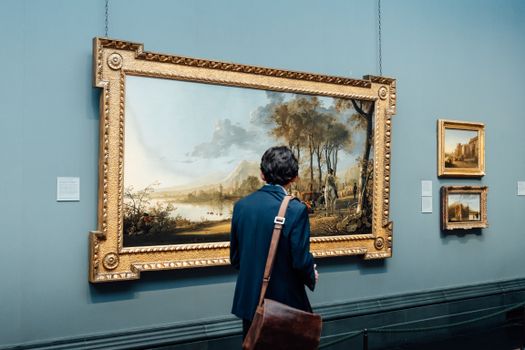
Just as words can inspire images, art can ignite the imagination of writers. This process, known as ekphrastic writing, has a storied history. From John Keats’s “Ode on a Grecian Urn” to Tracy K. Smith’s poems responding to NASA photographs, writers have long used visual art as a springboard for literary creativity.
Writers respond to visual art in several ways:
- Descriptive Exploration: Writers can use art as a prompt, describing its visual elements, exploring the story behind the image, or imagining the artist’s intent. - Emotional Response: Visual art can evoke powerful emotions, which writers channel into poetry, prose, or dramatic monologues. - Narrative Expansion: A single painting can inspire an entire short story or novel, with the writer filling in the narrative gaps suggested by the image.A 2020 survey by the International Association of Art Critics found that 42% of contemporary writers have used visual art as inspiration for their work, further illustrating the enduring connection between these fields.
Psychological Insights: How Words Shape Mental Images
The connection between creative writing and visual art is not just cultural—it’s rooted in human cognition. When we read descriptive language, our brains activate the same regions involved in visual perception. According to a 2017 study published in the journal “NeuroImage,” participants who read vivid narratives experienced increased activity in the occipital lobe—the brain area responsible for processing visual information.
This phenomenon, known as mental imagery, allows readers to “see” the scenes described in a text. Writers skilled in sensory detail and metaphor can conjure lifelike images in the reader’s mind, blurring the line between reading and seeing.
Psychologists have also found that the more concrete and specific the language, the stronger the mental image. For instance, the phrase “a red apple” evokes a clearer image than “a fruit.” This cognitive link explains why creative writing is a powerful tool for visual artists seeking inspiration.
Comparing Creative Writing and Visual Art: Overlaps and Differences
While creative writing and visual art are distinct disciplines, they share notable similarities and differences. The table below breaks down key aspects:
| Aspect | Creative Writing | Visual Art | Overlap |
|---|---|---|---|
| Primary Medium | Words, language | Images, materials | Both communicate ideas and emotions |
| Temporal Experience | Linear (read over time) | Spatial (viewed at once) | Both can tell stories and evoke moods |
| Interpretation | Often guided by narrative | Open to visual interpretation | Both allow for personal meaning-making |
| Collaboration | Scriptwriting, poetry, storytelling | Illustration, painting, sculpture | Graphic novels, book art, installations |
| Imagination | Sparks mental imagery in readers | Directly presents visual stimuli | Both engage viewer/reader imagination |
This comparison reveals that, despite their differences, both forms of art rely on the interplay between imagination, interpretation, and emotional engagement.
Modern Innovations: Digital Storytelling and Multimedia Art
In the 21st century, the relationship between creative writing and visual art has entered a new era. The rise of digital platforms has brought about hybrid forms that blend text, images, animation, and even sound. Interactive fiction, graphic novels, and transmedia storytelling are just a few examples.
- Interactive Fiction: Platforms like Twine allow writers to craft nonlinear narratives enhanced with visual and interactive elements, letting readers shape the story’s outcome. - Graphic Novels: Combining the depth of a novel with the immediacy of visual art, graphic novels like Art Spiegelman’s “Maus” or Alison Bechdel’s “Fun Home” have garnered critical acclaim and reached broad audiences. The global graphic novel market is projected to reach $6.7 billion by 2027 (Statista, 2023). - Digital Poetry: Artists experiment with kinetic typography, where words move and morph on screen, merging literary and visual experiences. - Social Media Art: Platforms such as Instagram and TikTok have given rise to micro-stories—short texts paired with visuals—that reach millions. According to Hootsuite, over 500 million people use Instagram Stories daily, many of which feature combinations of text and art.These innovations demonstrate that the intersection of creative writing and visual art is not static; it evolves alongside technology and audience expectations.
Why the Connection Between Creative Writing and Visual Art Matters Today
Understanding the synergy between creative writing and visual art is vital in a world saturated with content. This connection:
- Fosters Deeper Engagement: Combining words and images creates richer, more immersive experiences for audiences. - Encourages Creativity: Artists and writers can break boundaries, experiment, and collaborate in ways that push their crafts forward. - Enhances Communication: Multimodal storytelling is accessible to broader audiences, including those with different learning styles or language backgrounds. - Supports Education: A 2021 study by the Arts Education Partnership found that integrating visual and literary arts in classrooms boosts student engagement and retention by 25%.As art forms continue to merge and evolve, the dialogue between writers and artists will only become more essential to creative culture.