Nature is an eternal muse. From the windswept cliffs of Monet’s Normandy to the towering redwoods that inspired contemporary painters, the natural world has always held a profound sway over the hearts and hands of artists. The relationship between landscapes and artistic creation is dynamic and multifaceted, giving rise to masterpieces across mediums, cultures, and centuries. But what exactly is it about nature that ignites the creative spark? This article delves into the influence of nature on artistic creation, exploring how landscapes inspire artists, shape artistic movements, and continue to inform art in the 21st century.
The Historical Bond Between Artists and Nature
Throughout history, nature has been a central theme in art. As early as the Paleolithic era, humans painted animals and landscapes on cave walls, reflecting a fascination with their environment. In ancient China, landscape painting (shan shui) emerged as a dominant genre, symbolizing the harmonious balance between humans and nature. By the 19th century, European artists such as John Constable and Caspar David Friedrich used landscapes to evoke emotion and spiritual depth.
The Romantic movement exemplified this connection, with artists seeking to capture the “sublime”—the awe-inspiring, sometimes terrifying beauty of the natural world. The Hudson River School in the United States, active from 1825 to 1875, celebrated the American wilderness with sweeping vistas and dramatic lighting. The Impressionists, notably Claude Monet and Camille Pissarro, painted outdoors (en plein air), capturing fleeting effects of light and atmosphere.
.png)
Today, landscape remains a favorite subject, whether in painting, photography, or digital media. According to a 2022 Art Basel report, landscape art accounts for approximately 18% of all visual art sales worldwide, underlining its enduring appeal and economic significance.
How Nature Shapes Creative Processes
Nature influences artists far beyond providing a subject to paint or photograph. Scientific research shows that exposure to natural settings enhances creativity and problem-solving abilities. A 2012 study in the journal PLOS ONE found that participants scored 50% higher on creativity tests after spending just four days immersed in nature, away from urban distractions.
Artists often describe a heightened sense of clarity and focus when working outdoors. The unique conditions of each landscape—changing light, weather, and seasonality—demand rapid adaptation and acute observation. For example, the French Impressionists’ technique of rapid brushwork was partly a response to the shifting light they observed outdoors.
Moreover, the textures, colors, and patterns found in nature offer an infinite palette of inspiration. Georgia O’Keeffe’s iconic flower paintings were inspired by the dramatic landscapes of the American Southwest. Photographer Ansel Adams’ meticulous studies of Yosemite National Park revealed the interplay of light and shadow in ways that transformed landscape photography.
The process is not merely observational; it is immersive. Many artists report entering a ‘flow state’—a deep, meditative immersion in their work—when surrounded by nature. This synergy between environment and mind often leads to artistic breakthroughs.
Symbolism and Meaning: Landscapes as Metaphor
Beyond visual representation, landscapes are powerful conveyors of meaning. Different cultures attach symbolic significance to natural elements—mountains may represent permanence, rivers the passage of time, and forests the unknown.
Romantic artists used landscape to express inner emotions and philosophical ideas. For instance, Caspar David Friedrich’s “Wanderer above the Sea of Fog” (1818) is more than a depiction of a mountaintop; it is a meditation on self-reflection and the infinite. In Japanese art, the depiction of cherry blossoms is imbued with the transience of beauty and the impermanence of life.
Contemporary art continues this tradition. Environmental artists like Andy Goldsworthy create site-specific works that not only utilize natural materials but also address ecological concerns and the fragility of ecosystems. In Indigenous Australian art, landscapes are inseparable from stories of ancestry and cultural identity, serving as visual maps of spiritual lore.
Nature’s Influence Across Artistic Mediums
While painting and photography are perhaps most closely associated with landscape art, the influence of nature extends across artistic disciplines.
In sculpture, artists like Henry Moore drew inspiration from organic forms—rolling hills, bones, and stones. His large, abstract works echo the undulating forms found in the English countryside. Textile artists incorporate natural dyes and motifs, while architects like Frank Lloyd Wright designed buildings (such as Fallingwater) that integrate seamlessly with their natural surroundings.
Musicians, too, have been inspired by landscapes, from Beethoven’s “Pastoral Symphony” (1808) to the soundscapes of modern composers like John Luther Adams, whose works evoke the wildness of Alaska.
The table below highlights a few key examples across artistic mediums:
| Artistic Medium | Notable Artist | Famous Work | Landscape Inspiration |
|---|---|---|---|
| Painting | Claude Monet | Water Lilies (series) | Giverny Gardens, France |
| Photography | Ansel Adams | Moonrise, Hernandez, New Mexico | American West |
| Sculpture | Henry Moore | Reclining Figure | Yorkshire Landscape |
| Music | John Luther Adams | Become Ocean | Alaskan Wilderness |
| Architecture | Frank Lloyd Wright | Fallingwater | Bear Run, Pennsylvania |
The Role of Landscapes in Artistic Movements
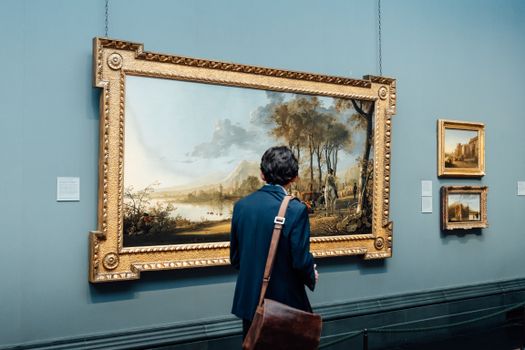
Landscapes have played a pivotal role in shaping entire artistic movements. In the 17th century, Dutch Golden Age painters like Jacob van Ruisdael and Aelbert Cuyp developed landscape painting as a genre in its own right, reflecting the rising middle class’s appreciation for depictions of their homeland.
The Barbizon School in France (1830–1870) marked a shift from idealized, classical landscapes to more realistic, humble scenes of rural life. This movement laid the groundwork for Impressionism, which revolutionized the art world by emphasizing direct observation and the fleeting effects of light.
In the 20th century, the Abstract Expressionists found inspiration in nature’s energy and chaos, though their works were often non-representational. Jackson Pollock’s drip paintings, for example, have been likened to natural processes such as the movement of water or the branching of trees.
Environmental art, which emerged in the late 1960s, took inspiration a step further by using the landscape itself as both canvas and material. Works like Robert Smithson’s “Spiral Jetty” (1970) in Utah’s Great Salt Lake blur the boundary between art and environment, inviting viewers to reconsider their relationship with nature.
Modern Perspectives: Technology and the Reimagining of Nature
Today’s artists have access to tools and technologies that enable new ways of engaging with nature. High-resolution photography, drones, and digital painting software allow for unprecedented exploration and documentation of landscapes.
Environmental concerns have also brought urgency to depictions of nature. With climate change threatening ecosystems, contemporary artists often use their work to advocate for conservation. For instance, photographer Edward Burtynsky’s large-scale images of industrial landscapes highlight the impact of human activity on the planet.
Virtual reality (VR) and augmented reality (AR) are opening fresh avenues for landscape art. Artists can now create immersive environments that transport viewers to distant or imagined landscapes. According to a 2023 report by ArtTactic, over 12% of digital art exhibitions in major cities included VR landscape experiences, reflecting growing interest in this intersection of technology and the natural world.
The Lasting Power of Nature-Inspired Art
Nature’s influence on artistic creation is as vital today as it was centuries ago. Landscapes inspire artists not only to capture beauty, but to question, interpret, and interact with the world around them. Whether through oil paint, camera lens, or digital code, the natural world remains a wellspring of imagination and meaning.
As society faces environmental challenges and rapid urbanization, art inspired by nature serves as a reminder of our deep-rooted connection with the land. It invites viewers to pause, reflect, and perhaps, to see the world with fresh eyes—just as artists have always done.