Art and Technology: How Modern Tools Transform the Creative Process
The relationship between art and technology has never been more dynamic or essential. For centuries, artists have searched for new tools to expand their creative horizons, but in the 21st century, the pace of innovation has accelerated dramatically. From artificial intelligence generating paintings to virtual reality installations that immerse viewers in alternate worlds, technology is redefining what it means to be creative. But how exactly are modern tools transforming the artistic process? This article delves into the rapidly evolving landscape where art meets technology, revealing how digital advancements aren't just changing how art is made—they're revolutionizing the very nature of creativity itself.
The Digital Canvas: Expanding Artistic Possibilities
Digital tools have dramatically broadened the scope of what artists can achieve. In the late 1980s, the introduction of software like Adobe Photoshop and Corel Painter empowered artists to manipulate images in ways that were previously impossible with traditional media. Today, creative software suites like Procreate, Clip Studio Paint, and Blender offer intuitive interfaces and powerful features, allowing artists to draw, paint, sculpt, and animate with unprecedented freedom.
One of the key advantages is flexibility. Undo buttons, layers, and digital brushes mean that experimentation comes without the risk of permanently ruining a work. For example, a survey by Statista found that as of 2023, over 79% of professional illustrators use digital tools as their primary medium, a figure that has steadily increased over the past decade.
.png)
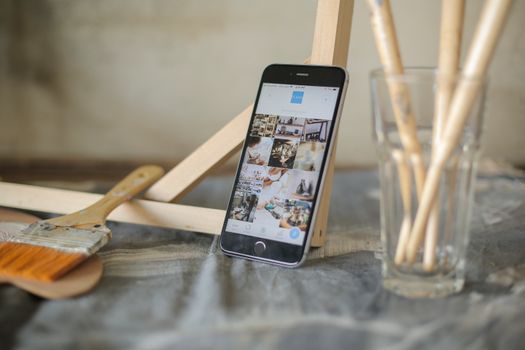
Moreover, digital art tools democratize creativity. With a tablet or even a smartphone, anyone can start making art—no expensive physical materials required. This accessibility has contributed to a global explosion of creative expression, visible on platforms like Instagram, Behance, and DeviantArt. According to Adobe, there are now over 20 million active users of their Creative Cloud products, spanning from hobbyists to seasoned professionals.
Artificial Intelligence: The Rise of Algorithmic Art
One of the most groundbreaking developments in recent years is the integration of artificial intelligence (AI) into the creative process. AI-powered tools can analyze, generate, and even critique artwork, opening up new avenues for both collaboration and experimentation.
AI art generators like DALL-E, Midjourney, and DeepArt have made headlines for their ability to create entirely new images from textual descriptions. Artists can now “co-create” with algorithms, using AI as a partner to explore styles, compositions, and concepts that might be difficult to imagine alone. In fact, in 2022, an AI-generated artwork titled "Théâtre D’opéra Spatial" won first place in the digital art category at the Colorado State Fair, sparking intense debate about the role of AI in the arts.
AI also assists in enhancing workflow efficiency. For instance, Adobe Sensei, Adobe's AI platform, automates mundane tasks like background removal, color correction, and style transfer, allowing artists to focus more on high-level creativity.
The growing prominence of AI in art raises important philosophical and ethical questions: Who owns an AI-generated artwork? What does originality mean when a machine can produce images indistinguishable from human creations? These debates, while unresolved, are now a vital part of the contemporary art conversation.
Immersive Experiences: Virtual and Augmented Reality in Art
Virtual reality (VR) and augmented reality (AR) are pushing the boundaries of how art is experienced and created. With VR platforms like Tilt Brush by Google or Oculus Medium, artists can sculpt and paint in three-dimensional space, creating immersive environments that viewers can explore from within.
For example, the 2018 exhibition "Carne y Arena" by Alejandro González Iñárritu used VR to place viewers directly into the shoes of migrants crossing the U.S.-Mexico border, exemplifying how technology can evoke empathy and tell stories in ways traditional art cannot. Similarly, AR installations—such as the "Rain Room" by Random International—use sensors and projections to create interactive artworks that respond to visitors’ movements.
According to a 2023 report from PwC, the VR and AR market in the arts is projected to reach $2.6 billion by 2025, supporting not just galleries and museums but also independent creators. This surge is driven by the public’s desire for novel, participatory experiences and by artists eager to break free from the limitations of physical media.
Collaborative Creation: How Technology Connects Artists Worldwide
The internet has revolutionized collaboration in the arts, enabling artists from different continents to work together in real time. Cloud-based platforms like Google Workspace, Figma, and Miro offer shared digital canvases where multiple users can sketch, design, or provide feedback simultaneously.
Crowdsourced projects have become a hallmark of this era. One notable example is the "Million Dollar Homepage," where thousands of users each purchased a pixel of advertising space, collectively creating a digital mosaic. On a more artistic level, the 2021 “r/place” experiment on Reddit invited millions to collaborate on a massive digital canvas, resulting in a living, evolving piece of art shaped by the community.
Technology also enables artists to reach new audiences through social media and online marketplaces. Platforms like Etsy, Artsy, and Saatchi Art have opened up global markets: in 2022, global online art sales reached $13.3 billion, according to Hiscox’s Online Art Trade Report. This connectivity not only boosts economic opportunity, it fuels creative cross-pollination, bringing fresh ideas and diverse perspectives into the creative process.
Comparing Traditional and Technological Art Tools
To understand the transformation brought by technology, it’s useful to compare traditional and modern artistic tools. Below is a table outlining key differences:
| Aspect | Traditional Tools | Modern Technological Tools |
|---|---|---|
| Accessibility | Often requires physical materials and studio space | Accessible via computers, tablets, and smartphones; lower entry cost |
| Flexibility | Limited by medium, mistakes can be permanent | Undo/redo, layers, infinite experimentation |
| Collaboration | Requires physical proximity | Real-time global collaboration via cloud platforms |
| Distribution | Local galleries, exhibitions | Online galleries, social media, NFTs |
| Interactivity | Primarily static, viewer is passive | Interactive, immersive (VR/AR), viewer becomes participant |
| Cost | Ongoing cost for materials | Initial investment in device/software, but reusable |
This comparison highlights how technology has not only made art creation more accessible and flexible but has also expanded the ways in which art can be shared and experienced.
New Frontiers: NFTs and Blockchain in the Art World
One of the most talked-about technological advancements in the art world is the rise of non-fungible tokens (NFTs) and blockchain. NFTs are digital certificates of ownership and authenticity stored on a blockchain, allowing digital artworks to be bought, sold, and collected as unique assets.
In March 2021, digital artist Beeple sold an NFT artwork titled “Everydays: The First 5000 Days” at Christie’s auction house for $69.3 million, making headlines worldwide. This sale not only catapulted NFTs into the mainstream but also sparked a new wave of digital art collecting. According to NonFungible.com, NFT art sales surpassed $1.5 billion in 2021 alone.
NFTs offer artists new ways to monetize their work, with smart contracts ensuring royalties whenever artworks are resold. However, the technology is not without controversy—issues such as environmental impact, copyright infringement, and market volatility continue to provoke debate.
Nevertheless, blockchain technology promises to make the art market more transparent and accessible. By recording transactions on a decentralized ledger, blockchain can help verify provenance and prevent forgeries, addressing long-standing challenges in the art world.
The Future of Art and Technology: A Symbiotic Evolution
The convergence of art and technology is not a fleeting trend but a fundamental shift in the creative landscape. As technology continues to evolve, so too will the ways in which artists conceive, create, and share their work. From AI-driven collaborations to immersive VR installations and blockchain-powered art markets, the creative process is becoming more dynamic, inclusive, and interactive than ever before.
Despite concerns about the loss of traditional skills or the over-reliance on software, most artists see technology as a tool—a means to enhance, not replace, human creativity. As the boundaries between disciplines continue to blur, the next generation of artists will undoubtedly harness both the brush and the algorithm, the canvas and the code, to create works that are unimaginable today.