Freedom of Expression: Censorship in Art
The freedom to create and share art is a cornerstone of human culture, allowing individuals and societies to express beliefs, question norms, and inspire change. Yet, throughout history and across the globe, this freedom has repeatedly come into conflict with censorship—official or unofficial efforts to suppress or control artistic expression. Censorship in art impacts what we see in galleries, hear in music, and read in literature, shaping the narrative of entire generations. In this article, we explore the complex relationship between freedom of expression and censorship in art, examining its history, motives, global variations, and its ongoing relevance in today’s digital age.
The Historical Struggle: Art vs. Authority
Censorship in art is not a recent phenomenon. From Ancient Greece to modern governments, authorities have long attempted to control creative expression, often seeing art as a threat to the social or political order. In 399 BCE, the philosopher Socrates was executed partly for corrupting the youth with his ideas—an early example of the power of words and ideas to disturb the status quo.
The Renaissance period was marked by church-driven censorship. For example, Michelangelo’s "The Last Judgment" fresco in the Sistine Chapel was altered in the 16th century after the Council of Trent deemed some nude figures inappropriate. In the 20th century, totalitarian regimes, such as Nazi Germany and Soviet Russia, aggressively censored and destroyed "degenerate" art, viewing it as dangerous propaganda.
.png)
Even today, governments and institutions across the world impose restrictions on what can be displayed or performed. In the United States, the National Endowment for the Arts faced intense scrutiny in the late 1980s for funding works considered obscene, such as Andres Serrano’s "Piss Christ" and Robert Mapplethorpe’s photography.
Motivations Behind Artistic Censorship
Censorship in art is driven by a variety of motives, often reflecting the values and fears of those in power:
1. $1 Authoritarian regimes frequently censor art that criticizes leaders, challenges official history, or encourages dissent. For example, in China, the government routinely removes artworks and performances deemed politically sensitive, such as those referencing the Tiananmen Square protests. 2. $1 Religious institutions and communities may oppose art that is blasphemous or challenges sacred beliefs. The infamous 1989 controversy over Martin Scorsese’s film "The Last Temptation of Christ" led to protests and bans in several countries. 3. $1 Concerns over sexuality, nudity, or violence often lead to censorship. In 2011, Facebook removed images of Gustave Courbet’s "L’Origine du monde" for violating its nudity policies, sparking debate about the line between art and obscenity. 4. $1 During times of war or crisis, governments sometimes suppress art they deem dangerous to national unity or morale. In the U.S. during World War I, the Espionage Act was used to prosecute artists and writers for anti-war sentiments. 5. $1 Art that challenges traditional gender roles, racial identities, or social customs may face backlash. For example, the banning of "The Satanic Verses" by Salman Rushdie in several countries was due to perceived cultural and religious offenses.Global Perspectives: Comparing Censorship Policies
The degree and form of censorship in art vary widely around the world. Some countries have strong legal protections for artistic freedom, while others enforce strict controls. The following table compares key aspects of censorship in several countries:
| Country | Legal Protection for Artistic Expression | Recent Example of Censorship | Enforcement Agency |
|---|---|---|---|
| United States | First Amendment protects freedom of speech, but subject to local laws on obscenity | Removal of controversial artworks from public museums (2017—Dana Schutz's "Open Casket") | Court system, local authorities |
| China | Strict government controls, no constitutional protection | Censorship of Ai Weiwei’s installations; blocking of films critical of the regime | Ministry of Culture, internet regulators |
| France | Strong legal protection, but with exceptions for hate speech and public order | Ban on certain exhibitions deemed “inciting hate” (Charlie Hebdo cartoons) | Courts, Ministry of Culture |
| Iran | Severe restrictions; art must comply with Islamic law | Ban on Western music and films; mandatory hijab for female performers | Ministry of Culture and Islamic Guidance |
| India | Constitutional protection, but frequent bans on films and books deemed offensive | Bans on films like "Padmavat" and Salman Rushdie’s "The Satanic Verses" | Censor Board, courts |
As the table shows, the experiences of artists differ radically depending on their geographic and political environment. According to the non-profit Freemuse, over 700 cases of artistic freedom violations were reported in 2022 alone, with the highest rates in the Middle East and Asia.
The Digital Age: New Frontiers, New Challenges
The rise of the internet and social media has created both opportunities and challenges for freedom of expression in art. On one hand, artists can now reach global audiences with unprecedented ease—YouTube, Instagram, and TikTok have become platforms for music, visual art, and performance. On the other hand, these digital spaces are subject to both government censorship and the content moderation policies of private companies.
For example, in 2019, Instagram removed more than 1 million posts containing nudity, including works of art, due to its automated moderation systems. Meanwhile, governments around the world have sought to control online art and speech: in Turkey, more than 245,000 websites were blocked as of 2021, many for hosting content deemed offensive or subversive.
Digital censorship can also be subtle, such as "shadow banning" where content is suppressed without the user’s knowledge. In Russia, artists using social media to criticize the government have faced not only content removal but also legal consequences, including fines and imprisonment.
Artistic Resistance: Creators Pushing Boundaries
Despite—and sometimes because of—censorship, artists have developed ingenious ways to circumvent restrictions and continue expressing their ideas. Throughout history, coded language, symbolism, and satire have been used to evade censors.
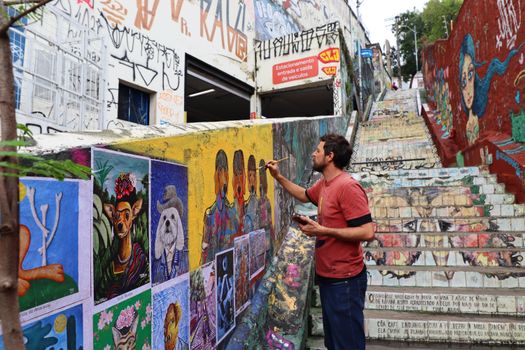
Soviet-era artists, for example, embedded hidden meanings in their work, using allegory to critique the regime. In Iran, filmmakers like Jafar Panahi have produced films covertly, smuggling footage out of the country for international release. Street art and graffiti, from Banksy in the UK to Lady Aiko in Japan, often serve as vehicles for dissenting voices.
Modern technology has provided new tools for resistance. In 2020, Hong Kong’s pro-democracy activists used blockchain technology to preserve protest art, making it nearly impossible for authorities to erase. Encryption, virtual private networks (VPNs), and decentralized platforms are increasingly used by artists to share their work beyond the reach of censors.
The Impact of Censorship on Society and Culture
The consequences of censorship in art go far beyond the individual artist. When creative voices are silenced, societies lose vital opportunities for dialogue, innovation, and reflection. Research indicates that societies with higher levels of artistic freedom tend to exhibit greater social tolerance and creativity. According to UNESCO’s 2018 Global Report, countries that protect artistic freedom contribute more to cultural diversity and economic growth: the global art market was valued at $65.1 billion in 2021, with the United States and Europe accounting for over 70% of sales.
Censorship can also backfire, drawing greater attention to the suppressed work—a phenomenon known as the "Streisand Effect." For instance, the banning of Salman Rushdie’s "The Satanic Verses" fueled international debates about free speech and religious tolerance, ultimately increasing the book’s global sales.
On the other hand, persistent censorship can lead to self-censorship, where artists preemptively alter their work to avoid controversy. This chilling effect stifles innovation and can deprive society of important new perspectives.
Protecting Freedom of Expression in Art: The Way Forward
The tension between freedom of expression and censorship in art is unlikely to disappear, given the diversity of cultures, religions, and political systems worldwide. However, there are ongoing efforts to protect artistic freedom. International organizations like PEN International and Freemuse advocate for artists’ rights and document violations. Legal frameworks, such as the United Nations’ Universal Declaration of Human Rights (Article 19), affirm the right to freedom of expression, including artistic creation.
Education and public dialogue are also crucial. By fostering understanding of the value of artistic freedom, societies can build resilience against censorship. Museums, galleries, and online platforms are increasingly partnering with artists and activists to promote free expression and provide safe spaces for dialogue.