Art and its Impact on Education: How Creative Approaches Improve Learning
The educational landscape is rapidly evolving, and as educators and policymakers look for ways to enhance learning outcomes, the integration of art into education has become an increasingly vital topic. While traditional subjects like mathematics, science, and language remain central to curricula worldwide, the inclusion of creative approaches—encompassing visual arts, music, drama, and dance—has demonstrated profound effects on student engagement, cognitive development, and social skills. In this article, we explore the multidimensional impact of art on education, draw on research-backed benefits, and illustrate how creative pedagogy is reshaping classrooms for the better.
The Science Behind Art Integration in Learning
A growing body of research underscores the cognitive advantages of incorporating art into educational settings. According to a 2019 study by the Brookings Institution, students exposed to increased arts education experienced a 13% improvement in standardized writing scores and a 20% reduction in disciplinary infractions. The neurological basis for these outcomes lies in how art activities stimulate multiple areas of the brain simultaneously, fostering connections that are essential for complex learning.
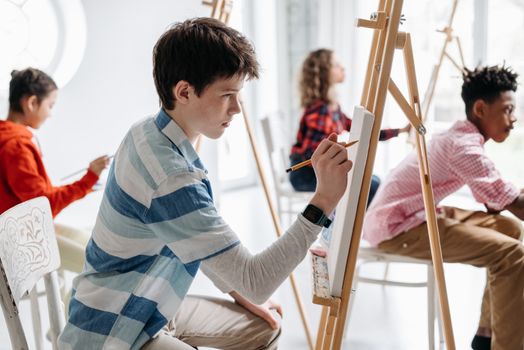
Neuroscientists have found that engaging in artistic activities boosts executive functions—skills such as problem-solving, memory, and self-regulation. For example, when children participate in drawing or painting, both hemispheres of the brain are activated: the right for creativity and the left for fine motor skills and planning. This bilateral activation is linked to improved information retention and better academic performance across subjects.
.png)
Further, the National Endowment for the Arts reports that students from low socioeconomic backgrounds who actively participate in arts programs are five times less likely to drop out of school compared to their peers with limited arts access. These compelling statistics highlight that art is not merely an enrichment activity but a crucial driver of educational equity and achievement.
Art as a Catalyst for Engagement and Motivation
One of the most significant challenges in education today is maintaining student interest and motivation, particularly in an age of digital distraction. Creative approaches, such as project-based learning, storytelling, and hands-on art projects, offer powerful tools to capture attention and make learning meaningful.
For example, a 2022 survey by Americans for the Arts found that 88% of teachers observed higher student engagement in lessons that incorporated artistic elements. When students are encouraged to illustrate a historical event, compose a song about a scientific concept, or act out a literary scene, they become active participants in their own education. This engagement not only enhances enjoyment but also strengthens comprehension.
Moreover, art-based activities often provide immediate, tangible results—such as a finished painting or a successful performance—giving students a sense of accomplishment and pride. Such positive reinforcement translates into greater intrinsic motivation, which research shows is associated with increased perseverance and better long-term learning outcomes.
Building Critical Thinking and Collaboration Skills Through Art
Beyond creativity, art education cultivates critical thinking, communication, and collaboration—skills that are essential for success in the 21st-century workforce. When students engage in group projects, critique each other’s work, or participate in collaborative performances, they develop the ability to articulate ideas, listen actively, and work effectively with others.
A notable example is the Studio Habits of Mind framework developed by Harvard’s Project Zero, which identifies eight key habits fostered by art education, including observing, reflecting, envisioning, and persisting. These habits align closely with the skills employers seek in a globally competitive economy.
In a comparative study of schools with and without robust arts programs, the Arts Education Partnership found that students at arts-rich schools were 35% more likely to demonstrate advanced problem-solving abilities and 28% more likely to express complex ideas effectively. These findings underscore how the arts serve not only as a creative outlet but also as a rigorous training ground for analytical and interpersonal competencies.
Art and Emotional Intelligence: Fostering Well-Being and Resilience
Education is not solely about academic achievement; it is also about nurturing well-rounded, emotionally intelligent individuals. The arts create a safe space for self-expression, emotional exploration, and empathy-building. Whether through painting, music, or drama, students can process feelings, explore identity, and develop greater self-awareness.
A 2021 meta-analysis published in Frontiers in Psychology revealed that participation in arts education is linked to higher levels of emotional regulation and empathy among children and adolescents. For instance, music and drama activities often require students to step into different roles or interpret emotional cues, fostering a deeper understanding of themselves and others.
Additionally, creative experiences strengthen resilience. The process of experimenting, failing, and iterating in art teaches learners to cope with setbacks—an invaluable life skill. These benefits are particularly pronounced for students facing adversity, as the arts can provide solace, purpose, and a sense of belonging.
Comparing Traditional and Creative Approaches in Education
To illustrate the tangible differences between conventional and arts-integrated teaching, consider the following comparison:
| Aspect | Traditional Teaching | Creative (Art-Integrated) Teaching |
|---|---|---|
| Student Engagement | Often passive (lectures, rote memorization) | Active participation (projects, collaboration) |
| Cognitive Skills Developed | Primarily factual recall, basic comprehension | Critical thinking, problem-solving, creativity |
| Social-Emotional Impact | Limited focus on SEL | High emphasis on self-expression, empathy |
| Learning Outcomes | Standardized test performance | Broader outcomes: academic, social, emotional |
| Student Motivation | Extrinsic (grades, exams) | Intrinsic (joy of learning, personal growth) |
As shown, creative approaches not only make learning more engaging and holistic but also help students acquire a wider array of competencies that extend beyond academic achievement.
Innovative Models of Arts Integration Worldwide
Countries around the world are recognizing the transformative power of art in education and implementing innovative models to maximize its benefits. In Finland, for example, the national curriculum mandates that all students participate in multidisciplinary learning modules, often integrating the arts with science, technology, and humanities. This approach has contributed to Finnish students’ consistently high rankings in international assessments such as PISA.
In the United States, the Turnaround Arts program—launched by the Kennedy Center—has brought arts education to over 80 underperforming schools nationwide. According to program data, these schools saw a 12.6% increase in reading proficiency and a 22.5% improvement in math proficiency after integrating arts into their curricula.
Similarly, Singapore’s Art Elective Programme (AEP) provides talented students with specialized training in visual arts, encouraging creative problem-solving and cultural literacy. Graduates of the AEP have gone on to excel not only in creative industries but also in fields like engineering, medicine, and law, demonstrating the versatility of arts-based skills.
Final Thoughts: Embracing Art for a Brighter Educational Future
The evidence is clear: integrating art into education yields far-reaching benefits, from enhanced academic performance and motivation to the development of critical life skills. Creative pedagogy does more than simply add color to the classroom; it equips students with the cognitive, social, and emotional tools they need to thrive in a rapidly changing world.
As schools, parents, and communities reevaluate educational priorities, embracing art and creativity is no longer an optional enrichment but an essential pillar of holistic learning. By investing in arts education, we invest in the next generation of thinkers, innovators, and empathetic citizens—ensuring that learning is not only effective but also inspiring and inclusive.